HEALTHCARE

Give healthcare teams more coordinated operations.

Connect the information, resources and responsibilities behind service delivery. Let AI advance authorized administrative work and involve the right people when a decision needs judgment, approval or additional information.

Coordinate healthcare operations with connected context.

Connect administrative systems, facilities, service requests, and documents around a shared operational case. Use AI to check information, resolve gaps, and prepare the next action within defined controls.

  1. Bring relevant system records into the operational case.
  2. Relate the case to the facilities and teams involved.
  3. Connect the service request to its operational context.
  4. Identify missing information in the supporting documents.
  5. Let AI check supplied information and request what remains missing.
  6. Present the checked information when approval is required.
  7. Release the permitted work once the approval condition is met.
  8. Give the responsible team clear instructions and current status.

Make the work around care easier to coordinate

Healthcare operations depend on timely handoffs between people with different responsibilities. An incomplete request, unavailable resource or unclear owner can create repeated follow-up and leave teams working from partial information.

Goveryn represents services, requests, facilities, equipment, documents and responsibilities in an ontology: a shared business model that explains how operational information fits together. Governed workflows define permitted actions, required checks and human decision points. AI receives the context and access appropriate to its role, with a clear path for escalating missing information or insufficient authority.
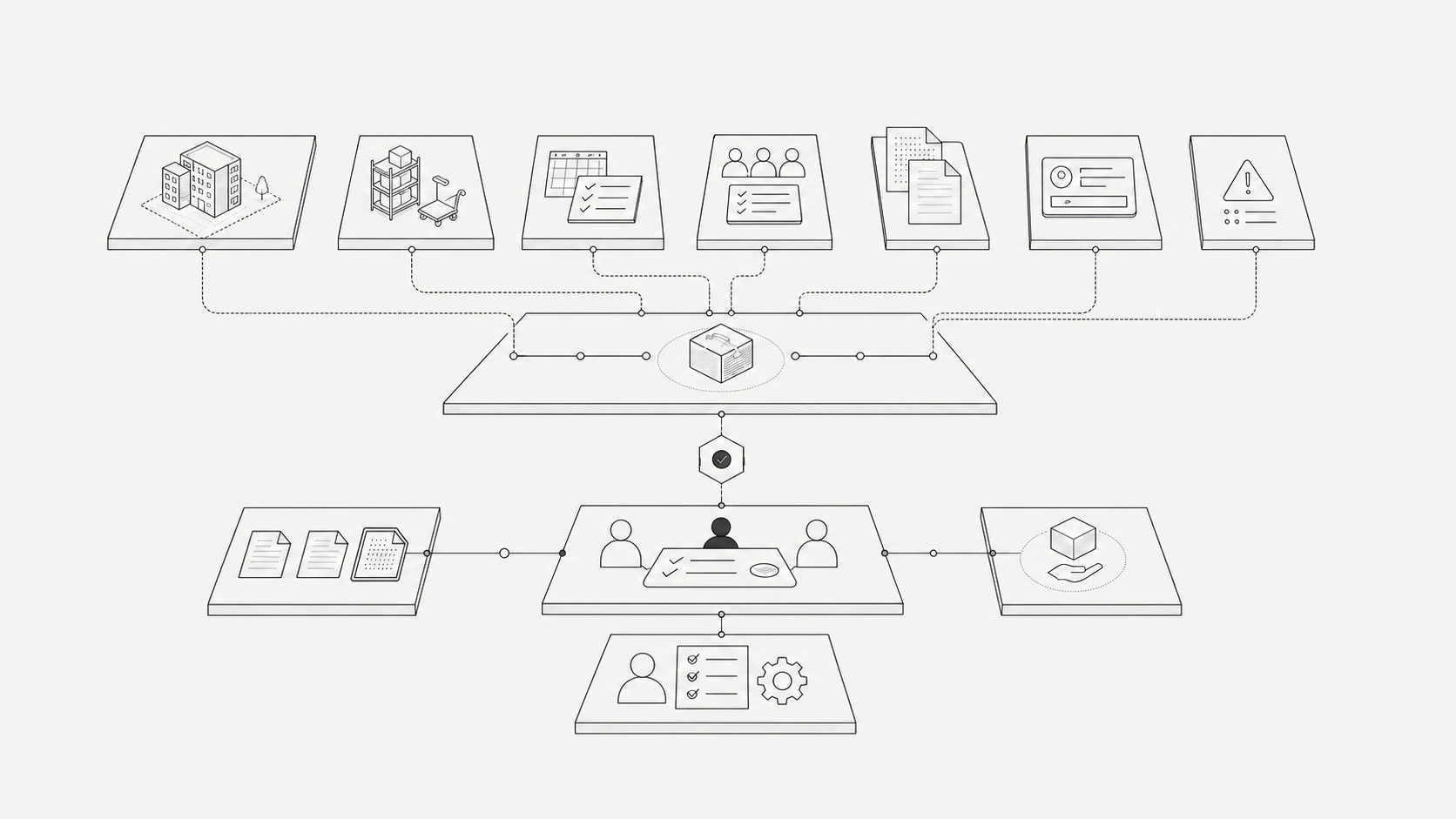
Connect the operational steps that support service delivery

Begin with a coordination process that regularly pulls staff away from their core work.

Service request administration

Connect incoming requests to the relevant service, required documents and responsible team. AI can check administrative completeness, prepare the next task and request missing inputs within its permissions, with specialist decisions assigned explicitly.

Equipment and facilities coordination

Relate equipment, locations, maintenance needs and service dependencies. AI can prepare maintenance tasks, coordinate available resources and flag conflicts for the responsible team before work advances through the required approval steps.

Staff onboarding and access

Connect roles, locations, training requirements and access approvals. AI can coordinate onboarding tasks and verify prerequisites, while designated owners approve access and resolve exceptions within the workflow.

Put human judgment at the right point in the workflow

A service request arrives without a required document. AI identifies the gap, sends an authorized follow-up and keeps the request in its defined waiting state. Once the administrative requirements are complete, it routes the request to the designated reviewer. If the request requires clinical interpretation, AI escalates that decision to the appropriate professional.

You define which administrative actions AI may complete and which decisions need human involvement. Permissions restrict access, validation checks readiness and the work history records how each step progressed.

Less coordination effort. Clearer responsibility.

  • Reduce repeated follow-up. AI can track required inputs and advance routine steps within the process you define.
  • Improve handoffs. A shared operational context carries the request, its status and its outstanding needs between teams.
  • Direct exceptions to the right people. Explicit responsibilities and escalation rules help teams address issues that require their expertise.

Start with an operational bottleneck

Bring a service workflow that depends on several teams. We will demonstrate how Goveryn connects its information, coordinates permitted actions and makes the human decision points explicit.

HEALTHCARE

Request a demo

Request a demo
Something went wrong. Please reload this page. Reload x